

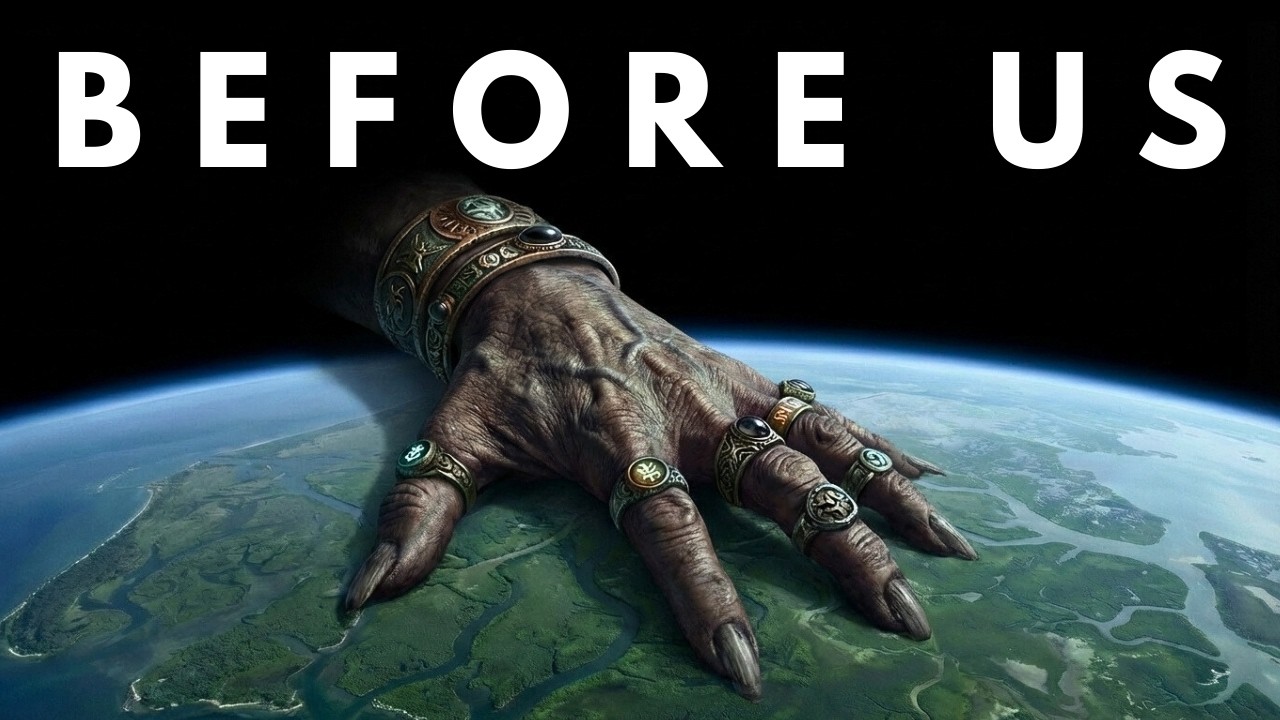
What if humanity is not the first advanced civilization to exist on Earth?
It may sound like science fiction, but some scientists have begun exploring a fascinating question: could intelligent societies have risen and disappeared millions of years before humans ever existed?
This idea challenges everything we think we know about history, evolution, and our place on the planet.
The Concept Behind the Theory
One of the most discussed scientific ideas related to this topic is the Silurian Hypothesis. Rather than claiming that ancient advanced civilizations definitely existed, this hypothesis asks a simpler question:
Would we even be able to detect them if they did?
Over millions of years, natural processes such as erosion, tectonic activity, and climate change could erase nearly all physical evidence of a civilization.
Clues Hidden in Deep Time
Scientists studying Earth’s past often rely on geological and chemical signals. Events like the Paleocene-Eocene Thermal Maximum show how dramatic changes can be recorded in the planet’s layers.
These markers raise an interesting possibility: if an advanced civilization had existed, it might have left behind subtle traces—such as unusual carbon levels or synthetic materials—that could still be detectable today.
Ancient Sites and Unanswered Questions
Archaeological discoveries like Göbekli Tepe continue to reshape our understanding of early human history. Structures like these suggest that organized societies may have existed earlier than previously believed.
While this does not prove the existence of lost advanced civilizations, it shows that our knowledge of the past is still evolving.
Science or Speculation?
It’s important to approach this topic carefully. Most scientists view the idea of pre-human advanced civilizations as speculative. However, exploring these possibilities can still be valuable.
By asking bold questions, researchers can better understand:
- The limits of the fossil record
- How civilizations impact planetary systems
- What evidence truly lasts over geological timescales
Why This Idea Captures Global Attention
The thought that something may have existed before us is both exciting and unsettling. It forces us to rethink humanity’s uniqueness and consider the possibility that civilizations can rise—and completely disappear.
Whether the theory proves true or not, it opens the door to deeper scientific exploration.
Watch the Full Documentary
Dive into the full discussion and explore the evidence, theories, and scientific debates surrounding the possibility of lost civilizations on Earth.
